What actually happened
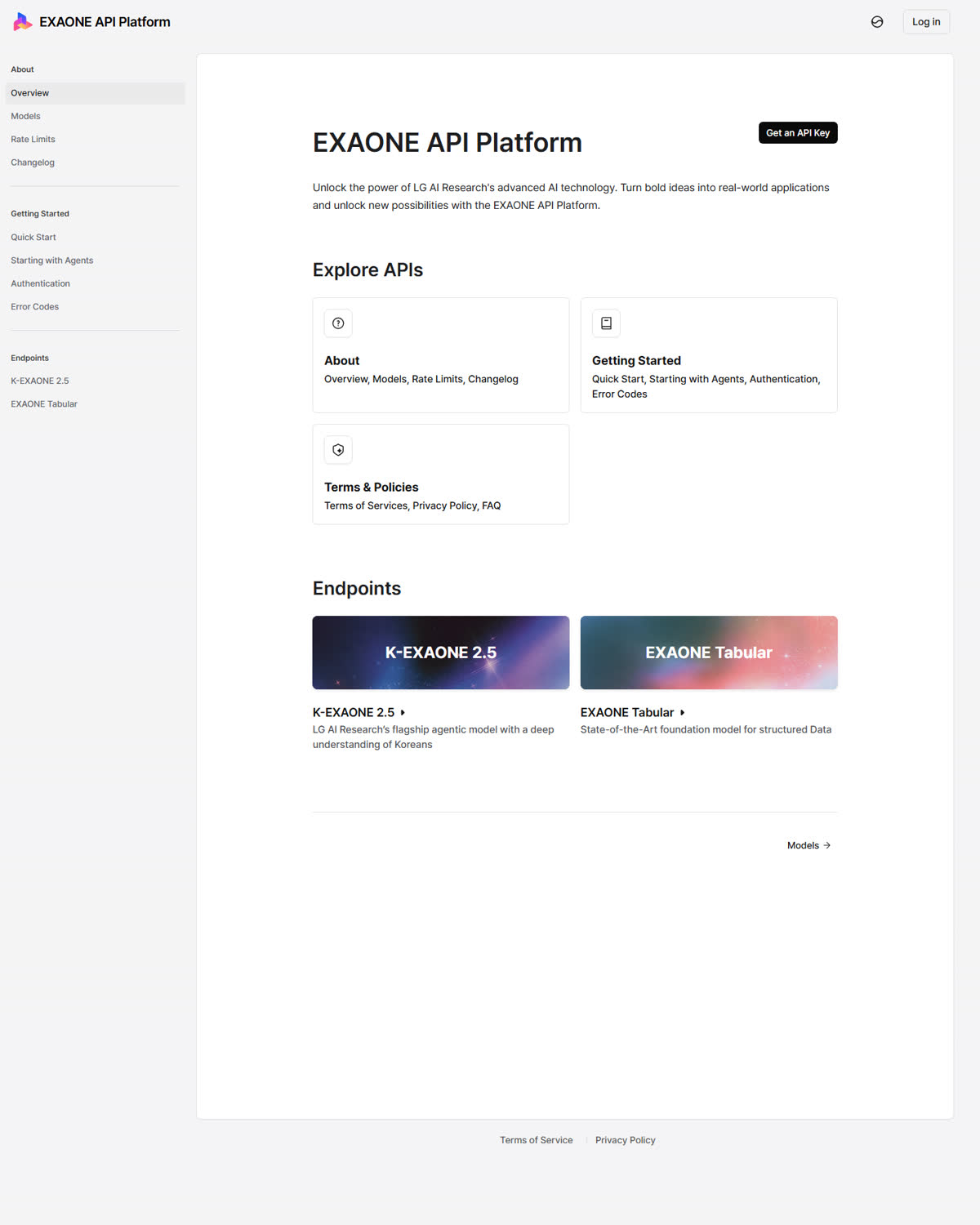
On November 9, at NVIDIA AI Day Seoul 2026, LG AI Research opened the API of its frontier-track model K-EXAONE 2.5 to the public at no charge. Developers, startups, companies and research institutions can grab an API key and use the model for service development and research. The official wording is "free for now", with no deadline announced.
It helps to know what this model is: not a brand-new build, but a technology-verification model: LG took the second generation of its sovereign foundation model (released in August) and applied additional training on top. It exists to prove out training methods before the third-generation model, which is targeting full frontier-level performance by January.
 🔍 View full resolution
Claim entry: docs.exaone.ai. Sign in with a workspace account and create a key from the dashboard.
The official spec sheet
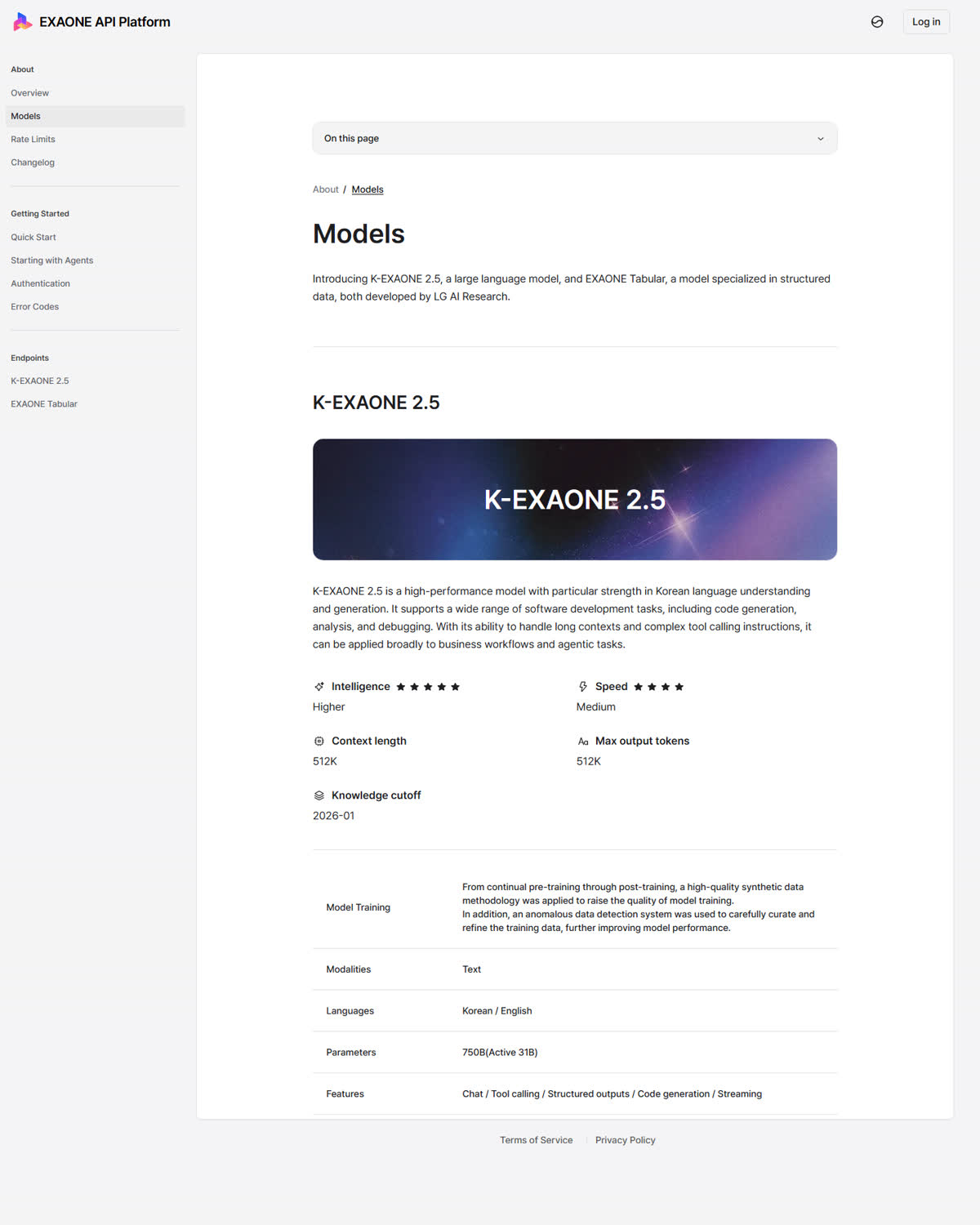
From the platform's own model page (verified Nov 9):
| Item | Spec |
|---|---|
| Architecture | MoE (750B total parameters, 31B active per token) |
| Context length | 512K tokens |
| Knowledge cutoff | 2026-01 |
| Modalities / Languages | Text · Korean / English |
| Features | Chat, tool calling, structured outputs, code generation |
| Self-rated Intelligence / Speed | ★★★★☆ / ★★★★ |
 🔍 View full resolution
The 750B/31B split is the interesting part: you get the capacity profile of a very large model while paying the latency and memory cost of a 31B-class network at inference time, assuming the free tier maintains reasonable rate limits.
Plugging it into your existing stack
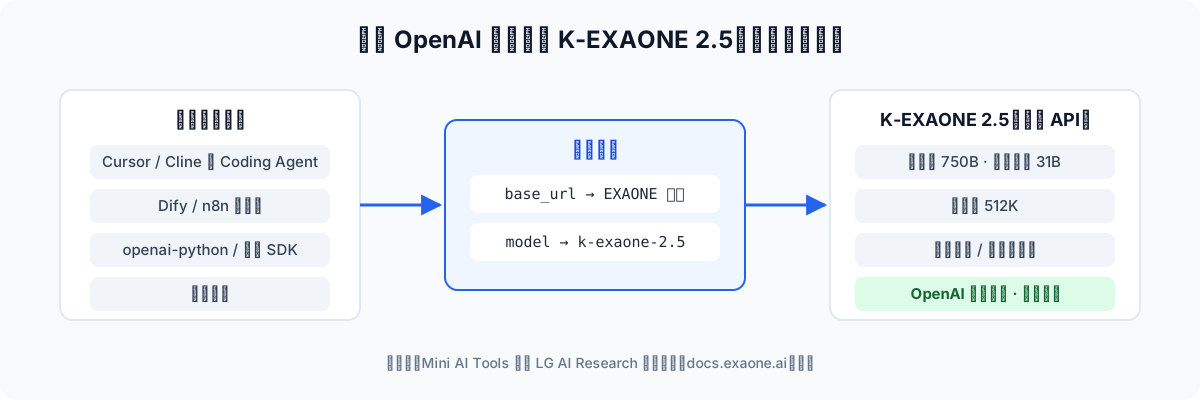
The API speaks the OpenAI-compatible protocol. In practice that means your Cursor, Cline, Dify workflow, n8n automation, or plain openai-python code keeps working: simply change the base URL to the EXAONE endpoint and set the model name. No new SDK, no rewiring.
 🔍 View full resolution
For agent builders specifically: the model page lists tool calling and structured outputs as first-class features, and the docs include a "Starting with Agents" guide. That positions K-EXAONE 2.5 as a free fallback brain for agent prototypes, particularly when primary model quota runs dry mid-experiment.
Performance claims, with an asterisk
LG says comprehensive performance across 24 evaluation metrics improved more than 70% in 8 weeks versus the August model, and its agent-capability benchmarks come close to DeepSeek V4.1 Flash and GLM 5.3 (max). Two caveats matter. First, these are LG's own measurements on open datasets, without third-party verification yet. Second, the model's strength is explicitly Korean-language understanding, with English close behind; other languages are uncharted territory for now.
| Claim | Source | How to read it |
|---|---|---|
| +70% vs August model (24 metrics, 8 weeks) | LG internal analysis | Directionally useful, not independently verified |
| Agent benchmarks ≈ DeepSeek V4.1 Flash / GLM 5.3 max | LG self-tests on open datasets | Promising; wait for community evals |
| Frontier-level performance by January | LG roadmap for gen-3 | Goal, not result |
Who should actually try it
Worth your time if you: build agents and want a free second opinion model for tool-calling pipelines; work with Korean text (this is the strongest Korean-first frontier model around); or just want to benchmark a 750B MoE against your current stack at zero cost.
Skip for now if you: need production SLAs (there are none, as "free for now" can end any day); need Chinese-language strength (unproven; the docs only claim Korean/English); or expect on-prem weights (K-EXAONE 2.5 is API-only for now).
The practical play: wire it into a staging environment behind your existing OpenAI-compatible tooling this week, run your own eval prompts against it, and keep the primary model unchanged. If the benchmarks hold up on your tasks, you have just acquired a free overflow capacity, delivering the real-world validation LG explicitly wants.
Mini AI Tools verdict
Verdict: worth claiming, manage expectations. A genuinely free 750B-class MoE with 512K context and a drop-in OpenAI-compatible interface is rare, and for agent prototyping the price is unbeatable. But the performance story is vendor-measured, the free window has no guarantee, and the language focus is Korean/English. Treat it as a strong free backup and a benchmarking opportunity, not a wholesale replacement for your current stack.